Showing posts with label before. Show all posts

Saturday, June 9, 2018

Haven't We Seen This Movie Before? Ignore Rumors Of iPhone Production Cuts

Apple’s shares were down almost $ 2, or 0.9% on Friday to $ 191.70 while the NASDAQ was up 10 or 0.14%. At the low point, the company’s shares were down almost $ 4 or 1.9%. The main driver for the stock’s weakness was a report from Nikkei Asian Review that the company would order 20% fewer new iPhones to be built vs. last years 100 million iPhone 8, 8 Plus and X orders.
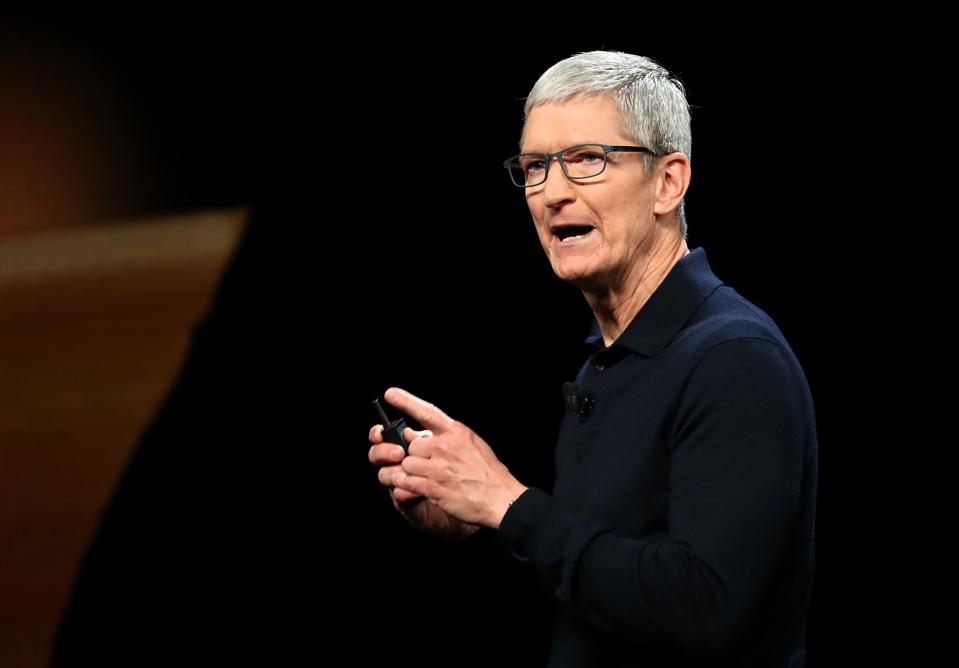
Apple CEO Tim Cook speaks during the 2018 Apple Worldwide Developer Conference (WWDC). Photo by Justin Sullivan/Getty Images

The report from Nikkei says “For the three new models specifically, the total planned capacity could be up to 20% fewer than last year"s orders" and “The U.S. company last year placed orders to prepare for production of up to 100 million units of the new iPhone 8, iPhone 8 Plus and iPhone X, but this year Apple currently expects total shipments of only 80 million units for new models, two people said.”

There are a few unknowns from the report, which could make for an apples to oranges comparison.

  • Does the order timeframe match the same months as last years?
  • Does the 80 million match what was initially ordered for the 8, 8 Plus and X (which was reported to be decreased) or the final tally?
  • The report also says “could be up to 20%”

There are a few reasons to be skeptical of this report .

  • Over the years many production cut rumors have turned out to be false
  • Earlier this year there were multiple reports, including from Nikkei, that the production for the iPhone X had been cut, which turned out to be incorrect or misleading to Apple’s results
  • Depending on what new models are introduced, demand for older models including the 8, 8 Plus and especially the X could still be strong enough to make up for what is being implied as lower total sales

I don’t believe Nikkei has the best track record scooping Apple’s iPhone production and eventual sales . It was just on January 30 this year, two days before the company announced its December quarter results, that it predicted that iPhone X production would be cut by half for the March quarter.

When Apple announced its December quarter results the iPhone inventory levels were at the low-end of its 5 to 7 weeks target, and the March quarter revenue guidance of $ 60 to $ 62 billion bracketed the $ 61 billion estimate. The stock initially fell but after a week rallied and climbed above the price when Nikkei came out with its article.

Add to that Tim Cook saying the X had been the best selling iPhone “each and every week in the March quarter, just as they did following its launch in the December quarter.” These didn’t match well with an iPhone X cut.

All new iPhone models could be available in September

The Nikkei report included “Apple"s supply chain was told to prepare earlier for the two OLED models, in hopes of avoiding a delay similar to last year"s, two industry sources said.”

This actually makes sense. I’m not surprised that the iPhone X’s availability was later than the 8’s due to incorporating an OLED screen. Just because the iPhone’s cadence has essentially been every 12 months doesn’t mean that production systems can meet that timeframe when new technology is introduced. Now that Apple’s production partners have experience with manufacturing tens of millions of OLED iPhones, moving to the next version shouldn’t be as challenging.

Tim Cook’s warning

Even back in 2013, Tim Cook warned investors about putting too much credence into supply chain checks. On the January 2013 financial results conference call, he said, “I suggest its good to question the accuracy of any kind of rumor about build plans. Even if a particular data point were factual, it would be impossible to interpret that data point as to what it meant to our business. The supply chain is very complex and we have multiple sources for things. Yields can vary, supplier performance can vary. There is an inordinate long list of things that can make any single data point not a great proxy for what is going on.”

StockCharts.com

3 year Apple stock chart


Tech

Saturday, March 24, 2018

At Uber, Troubling Signs Were Rampant Long Before a Fatal Self-Driving Crash

For more than a year prior to a fatal crash in Arizona, Uber’s self-driving cars failed more often, and more dramatically, than competitors’ autonomous vehicles. At the same time, Uber reduced some safety precautions, and was sometimes misleading in its description of its program and its failures. And regulators in Arizona, the locus of Uber’s testing, have taken little action to protect residents despite those worrying signals.

It is not yet clear whether Uber’s system was at fault or not in the latest crash, but Uber has now halted all testing of its autonomous vehicles, with no clear timeline for reactivation.

The New York Times reported yesterday that, in October of last year, Uber altered its testing program by putting only one safety monitor in each autonomous car rather than two, over the safety concerns of some employees. That move came despite evidence of deep problems with Uber’s autonomous vehicle efforts, dating back as far as December of 2016. That’s when Uber vehicles were seen running red lights in San Francisco. The company first blamed one of its human safety drivers, before it was uncovered in February that the problem was actually with the autonomous system itself.

Evidence quickly emerged that this was not a freak occurrence. In March of 2017, Recode obtained internal documents showing that human drivers had to take over from Uber’s system very frequently relative to the same numbers for other self-driving efforts. Then, the same month, a self-driving Uber flipped on its side in Arizona, though Tempe police found the Uber was not at fault.

Get Data Sheet, Fortune’s technology newsletter.

These public troubles seemed to reflect internal problems. The leadership of Uber’s self-driving car unit has frequently been described as troubled, with high levels of engineer attrition. Meanwhile, Google spinoff Waymo alleged in an explosive lawsuit that Uber had stolen technology from it by way of former Waymo executive Anthony Levandowski, who was fired from Uber in May of last year.

Finally, just a few days before this week’s fatal crash, an Uber vehicle in self-driving mode crashed into another vehicle in Pittsburgh. Fault in that crash had not been determined as of recent reporting.

San Francisco regulators put a quick stop to Uber’s testing there in the wake of the red-light incident. But even after sustained warning signs, Arizona officials took no such action, and reiterated this week that there were no plans to change the state’s hands-off regulatory approach.

Many observers believe that the future of Uber hinges on the success of its autonomous driving program. The company regularly posts quarterly losses with few historical parallels, even as regulators and critics argue with growing vehemence that the company is exploiting and underpaying its drivers.

Autonomous vehicles were intended to square that financial circle by taking driver pay out of the equation. The company, according to the Times, had planned to launch a self-driving car service in Arizona by December. CEO Dara Khosrowshahi has canceled a planned April visit to Phoenix to check in on the program’s progress, though the company claims that change is unrelated to the crash. The company’s bigger plans could also now wind up delayed – including not only progress on the road to autonomous driving, but towards its hotly anticipated initial public offering.


Tech

Saturday, January 27, 2018

Before Investing in Artificial Intelligence, You Should Know These 4 Things

IPsoft is, in many ways, an unusual entrant into the crowded, but burgeoning, artificial intelligence industry. First of all, it is not a startup, but a 20-year-old company and its leader isn"t some millennial savant, but a fashionable former NYU professor named Chetan Dube. It bills its cognitive agent, Amelia, as the "world"s most human AI."

It got its start building and selling autonomic IT solutions and its years of experience providing business solutions give it a leg up on many of its competitors. It can offer not only technological solutions, but the insights it has gained helping businesses to streamline operations with automation.

Ever since IBM"s Watson defeated human champions on the game show Jeopardy!, the initial excitement has led to inflated expectations and often given way to disappointment. So I recently met with a number of top executives at IPsoft to get a better understanding of how leaders can successfully implement AI solutions. Here are four things you should keep in mind:

1. Match The Technology With The Problem You Need To Solve

AI is not a single technology, but encompasses a variety of different methods. In The Master Algorithm veteran AI researcher Pedro Domingos explains that there are five basic approaches to machine learning, from neural nets that mimic the brain, to support vector machines that classify different types of information to graphical models that use a more statistical approach.

"The first question to ask is what problem you are trying to solve." Chetan Dube, CEO of IPsoft told me. "Is it analytical, process automation, data retrieval or serving customers? Choosing the right a technology is supremely important." For example, with Watson, IBM has focused on highly analytical tasks, like helping doctors to diagnose a rare case of cancer.

With Amelia, IPsoft has chosen to target customer service, which is extraordinarily difficult. Humans tend not to think linearly. They might call about a lost credit card and then immediately realize that they wanted to ask about paperless billing or how to close an account. Sometimes the shift can happen mid-sentence, which can be maddening even for trained professionals.

So IPsoft relies on a method called spreading activation, which helps Amelia to engage or disengage different parts of the system. For example, when a bank customer asks how much money she has in her account, it is a simple data retrieval task. However, if a customer asks how she can earn more interest on her savings, logical and analytical functions come into play.

2. Train Your AI As You Would A New Employee

Most people by now have become used to using consumer facing cognitive agents like Google voice search or Apple"s Siri. These work well for some tasks, such as locating the address for your next meeting or telling you how many points the Eagles beat Vikings by in the 2018 NFC Championship (exactly 31, if you"re interested).

However, for enterprise level applications, simple data retrieval will not suffice, because systems need domain specific knowledge, which often has to be related to other information. For example, if a customer asks which credit card is right for her, that requires not only deep understanding of what"s offered, but also some knowledge about the customer"s spending habits, average balance and so on.

One of the problems that many companies run into with cognitive applications is that they expect them to work much like installing an email system -- you just plug it in and it works. But you would never do that with a human agent. You would expect them to need training, to make mistakes and to learn as they gained experience.

"Train your algorithms as you would your employees" says Ergun Ekici, a Principal and Vice President at IPsoft. "Don"t try to get AI to do things your organization doesn"t understand. You have to be able to teach and evaluate performance. Start with the employee manual and ask the system questions." From there you can see what it is doing well, what it"s doing poorly and adapt your training strategy accordingly.

3. Apply Intelligent Governance

No one calls a customer service line and asks a human to talk to a machine. However, we often prefer to use automated systems for convenience. For example, when most people go to their local bank branch they just use the ATM machine outside without giving a thought to the fact that there are real humans inside ready to give them personalized service.

Nevertheless, there are far more bank tellers today than there were in before ATMs, ironically due to the fact that each branch needs far fewer tellers. Because ATMs drastically reduced the costs to open and run branches, banks began opening up more of them and still needed tellers to do higher level tasks, like opening accounts, giving advice and solving problems.

Yet because cognitive agents tend to be so much cheaper than human ones, many firms do everything they can to discourage a customer talking to a human. To stretch the bank teller analogy a little further, that"s almost like walking into a branch with a problem and being told to go back outside and wrestle with the ATM some more. Customers find it incredibly frustrating.

So IPsoft stresses to its enterprise customers that it"s essential that humans stay involved with the process and make it easy to disengage Amelia when a customer should be rerouted to a human agent. It also uses sentiment analysis to track how the system is doing. Once it becomes clear that the customer"s mood is deteriorating, a real person can step in.

Training a cognitive agent for enterprise applications is far different than, say, Google training an algorithm to play Go. When Google"s AI makes a mistake, it only loses a game, but when an enterprise application screws up, you can lose a customer.

4. Prepare Your Culture For AI As You Would For Any Major Shift

There are certain things robots will never do. They will never strike out in a little league game. They will never have their heart broken or get married and raise a family. That means that they will never be able to relate to humans as humans do. So you can"t simply inject AI into your organizational culture and expect a successful integration.

"Integration with organizational culture as well as appetite for change and mindset are major factors in how successful an AI program will be. The drive has to come from the top and permeate through the ranks," says Edwin Van Bommel, Chief Cognitive Officer at IPsoft.

In many ways, the shift to cognitive is much like a merger or acquisition -- which are notoriously prone to failure. What may look good on paper rarely pans out when humans get involved, because we have all sorts of biases and preferences that don"t fit into neat little strategic boxes.

The one constant in the history of technology is that the future is always more human. So if you expect to cognitive applications simply to reduce labor, you will likely be disappointed. However, if you want to leverage and empower the capabilities of your organization, then the cognitive future may be very bright for you.


Tech