The Federal Energy Regulatory Commission (or "FERC") divides the country into 10 electricity districts:
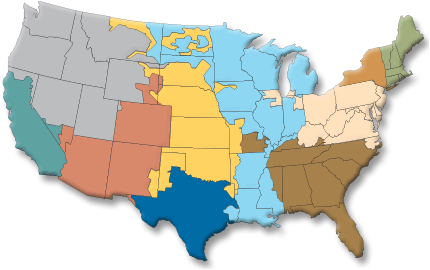
California - save for a small sliver at the top of the state - is its own market. Before looking at the major utility companies, let"s take a look at the state"s economy, which is one of the largest in the U.S., accounting for 14.21% of total U.S. GDP. The state has been growing at a decent pace:
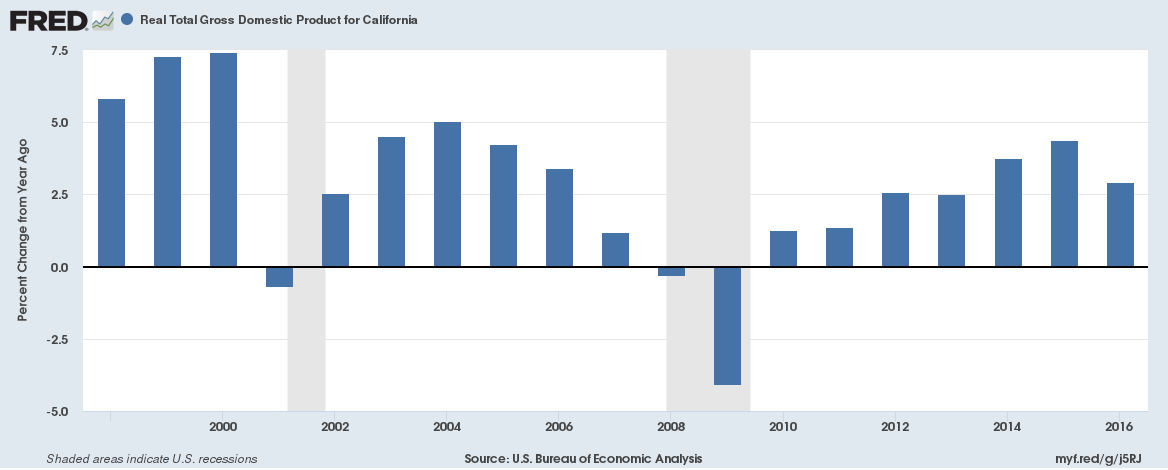
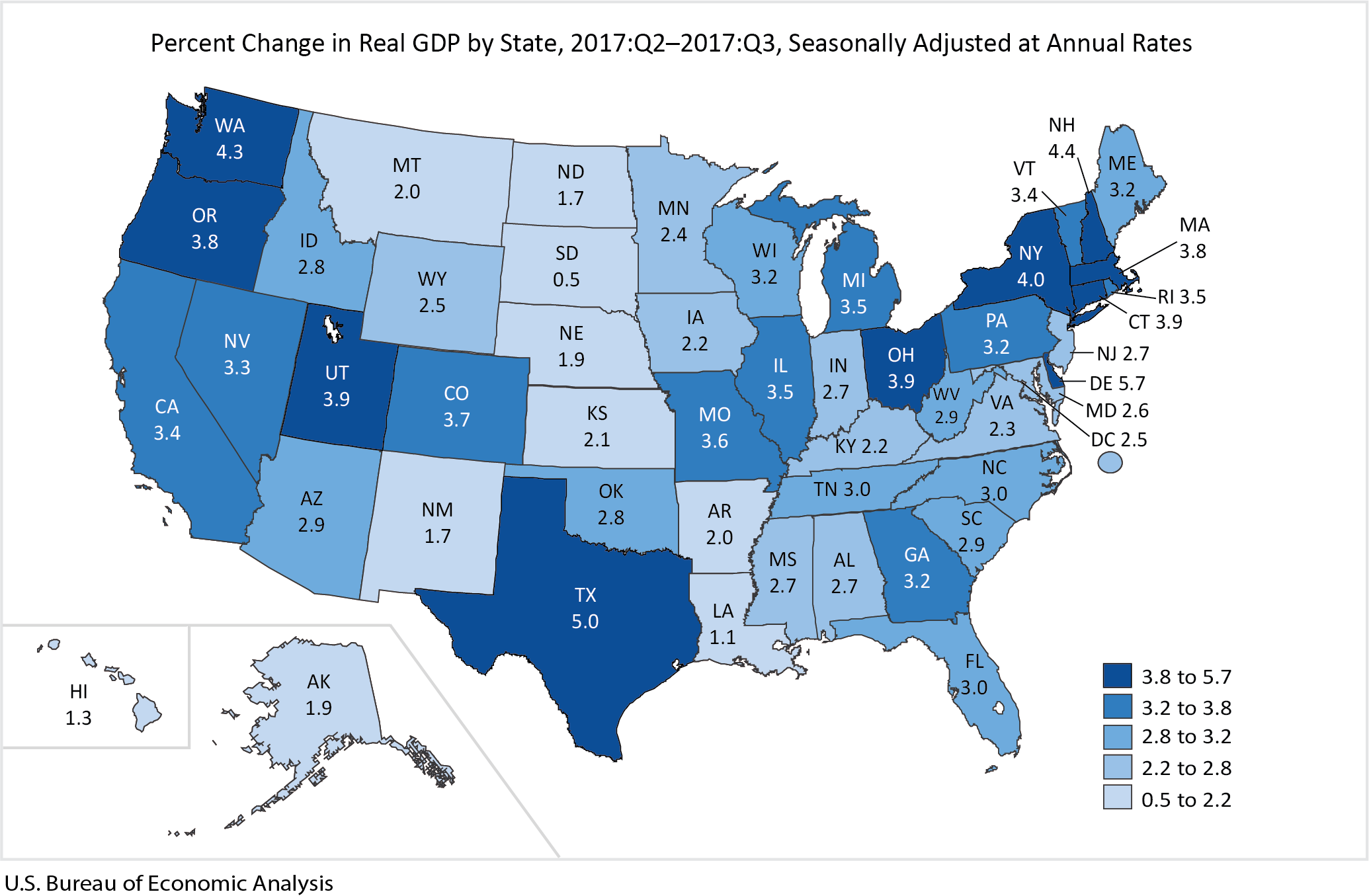
In the last five years, California has grown between 2.5% and 2.75% Y/Y. According to the latest GDP data from the BEA, the state grew at a 3.4% GDP annual rate in 3Q17:
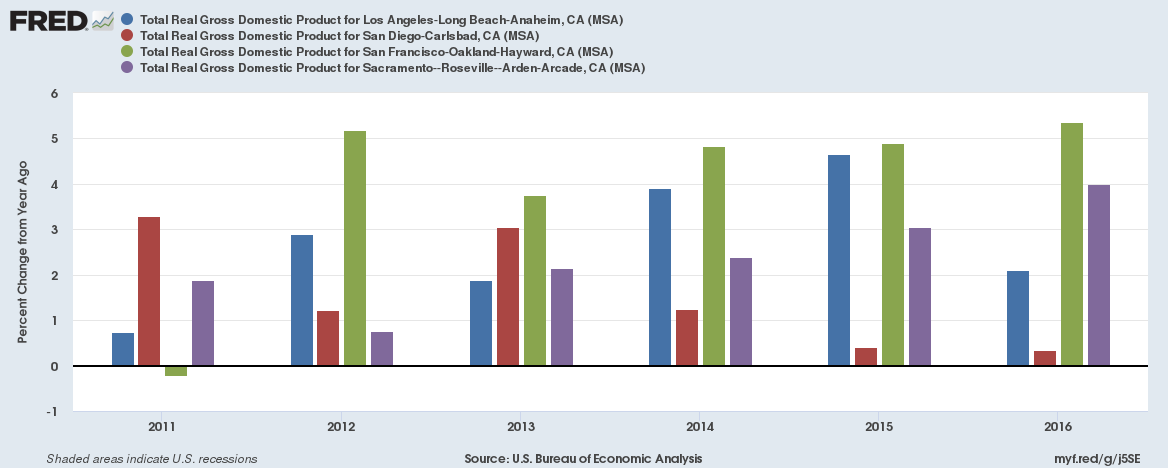
The state"s four largest metropolitan areas have grown for the last five years:
The state"s population is growing:
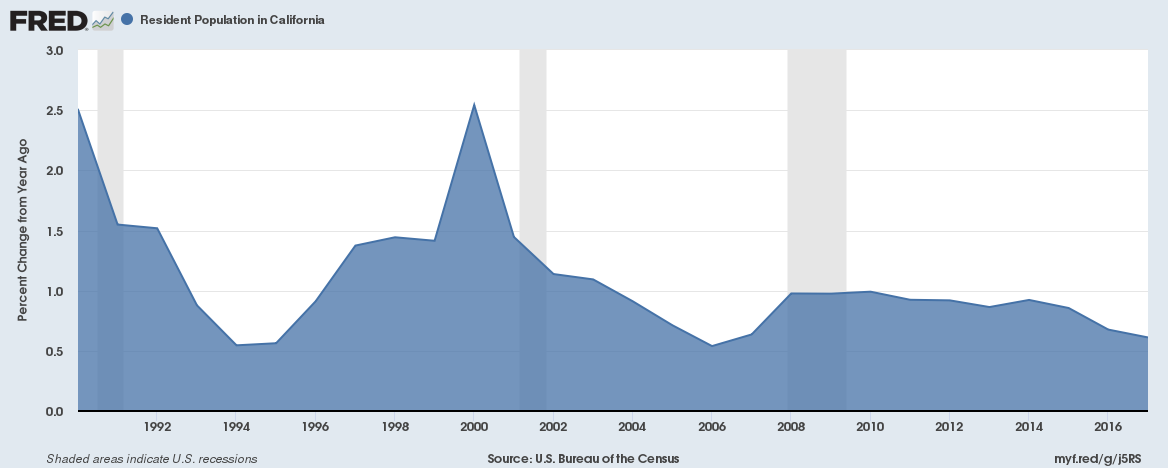
This points to future growth: potential GDP = population growth + productivity growth.
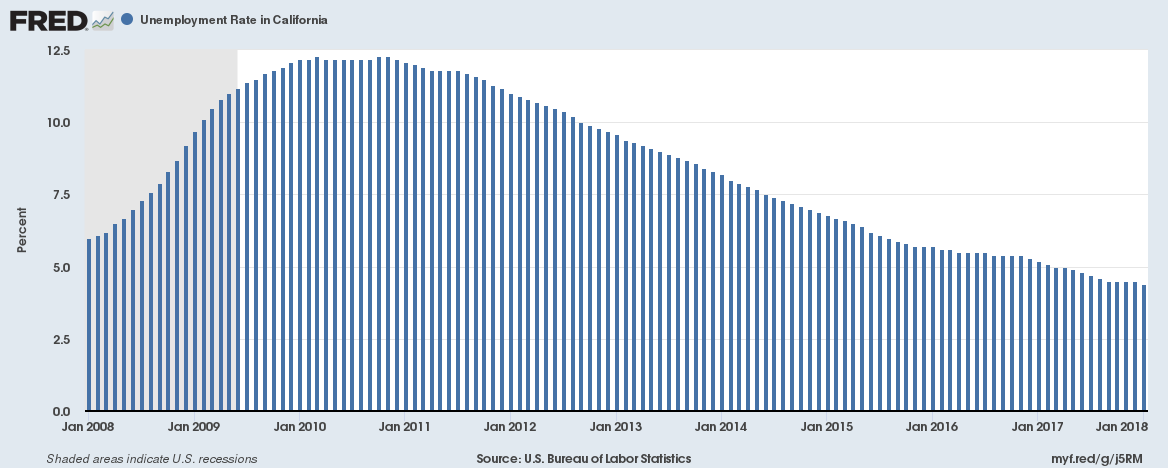
And the unemployment rate is below 5%.
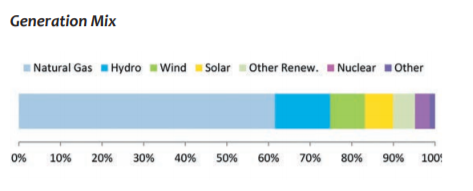
The California Energy market is managed by CAISO. Natural gas, hydro, wind and solar are the primary sources of power generation:
The region has a strong commitment to green technology:
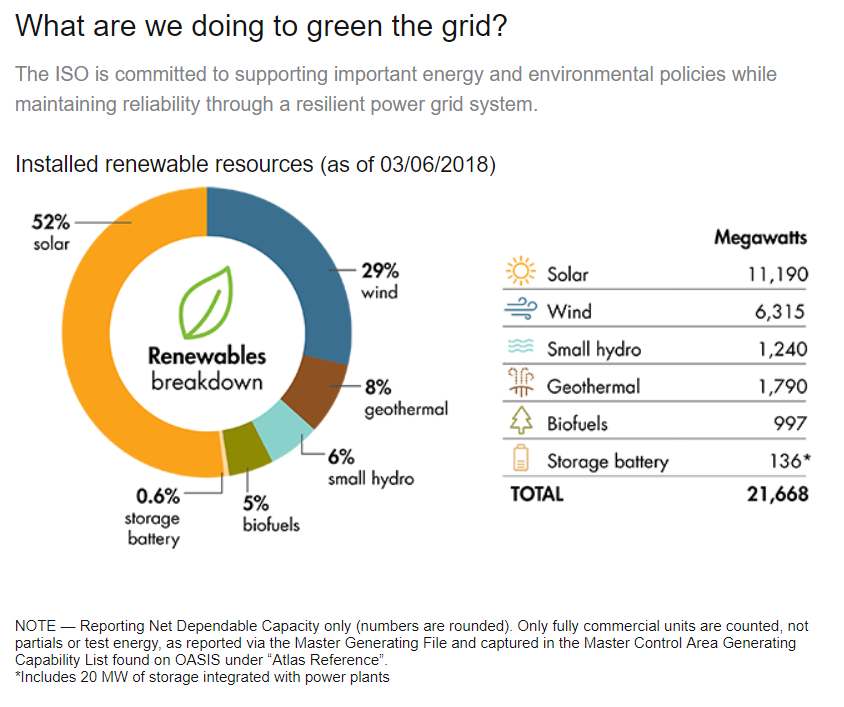
It currently has 21,668MW of power coming from its alternative sources.
The state has three main power companies:
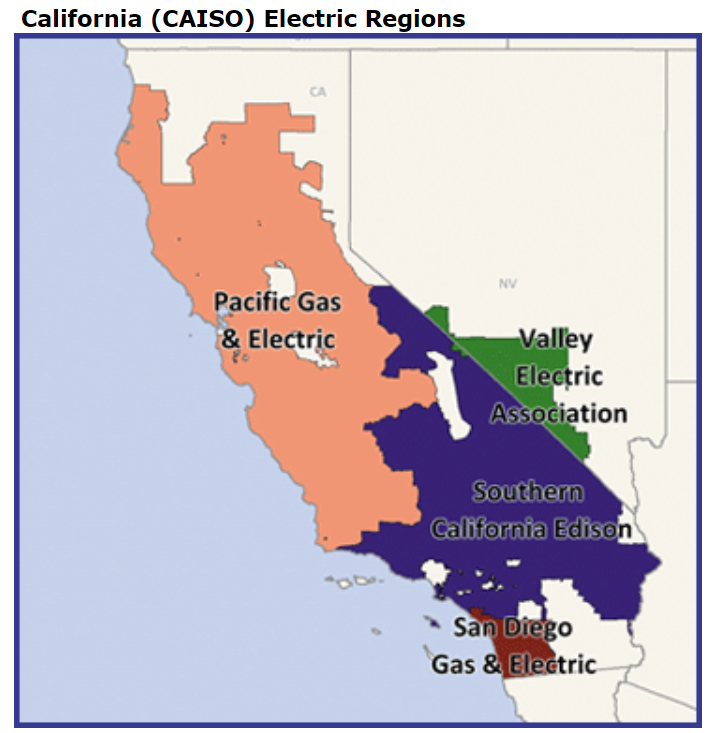
The biggest issue facing these companies right now is dealing with the long-term damage caused by recent wildfires. Pacific Gas & Electric (NYSE:PCG) suspended its dividend at the end of last year. As I noted in my write-up of Southern California Edison (NYSE:EIX), the company has a $1 billion insurance policy for fire damage. The company has also stated it will begin a large capital improvement program soon, so it"s possible that some of the physical capacity it was going to improve was destroyed by the fire. Sempra Energy (NYSE:SRE) (San Diego Gas & Electric) wasn"t in the area of the wildfires last year. However, the CPUC denied Sempra"s request to recover $379 million from the 2007 wildfires (emphasis added):
Moody"s also issued a public comment on December 20, 2017 regarding recent wildfires in northern California and Ventura County, California indicating that the December 6, 2017 decision issued by the CPUC denying SDG&E"s request to recover approximately $379 million of pretax costs associated with the 2007 wildfires (based on the CPUC"s finding that SDG&E did not reasonably operate the facilities involved in the wildfires) is credit negative for SDG&E, for Sempra Energy and for other California utilities seeking to recover costs from wildfires.
That decision may be isolated due to the CPUC"s finding that SRE "did not reasonably operate the facilities involved in the wildfire."
Let"s take a look at the companies in geographic order from north to south, looking at their chart and relevant financial data for dividend investors.
Pacific Gas & Electric
PCG"s stock chart has taken it in the teeth the last six months:

We see two large drops. The first one occurred in mid-October and one again in December when it suspended its dividend. While it"s understandable that it did so, it"s also a shame because the company has wonderful financials for dividend investors (data from Morningstar.com; author"s calculations):
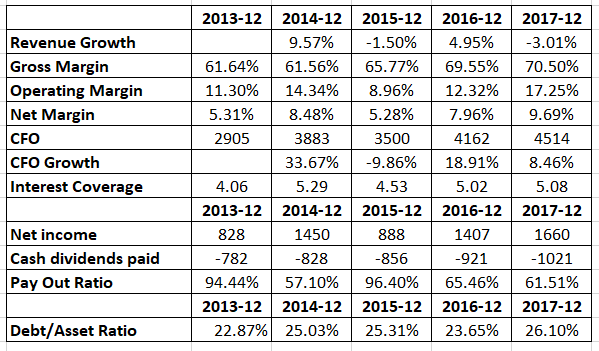
Note the five-year increase in the company"s gross, operating, and net margins. It has ample interest coverage and a conservative debt/asset ratio. However, we can also see why the company suspended its dividend; it saves slightly over $1 billion/year, which it may need to rebuild its physical plant.
Edison International
For utility investors, EIX"s stock price has a familiar pattern:
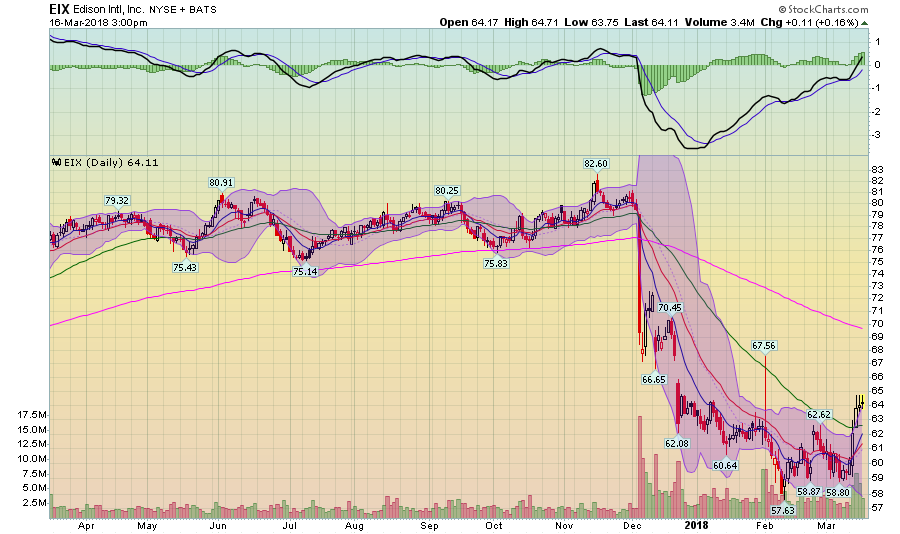
Edison was hit by a double-whammy at the end of last year: the Treasury market sell-off, which eventually hit the broader market, and the California wildfires. The good news from a technical perspective is EIX has broken through the shorter EMAs with a rising MACD.
Here is the relevant information from the company"s financial statements:
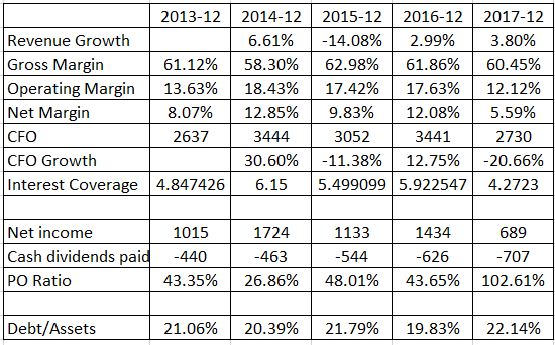
Unlike PCG, EIX has had fairly constant margins for the last five years, save for the drop in net income last year. It has ample interest coverage and its debt/asset ratio is well contained.
Sempra
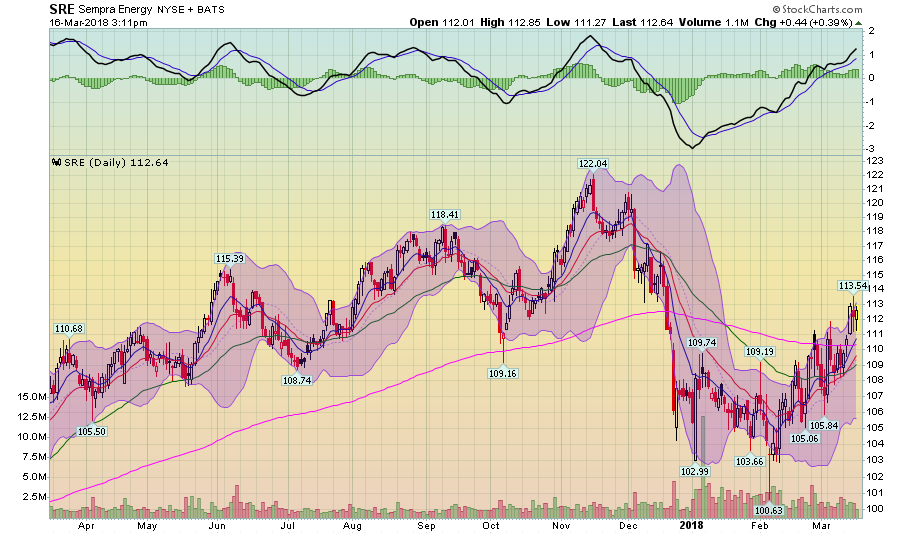
Sempra is in the best technical shape; its price has moved through the 200-day EMA and the MACD is positive. Its better position is probably due to the company having no exposure to the recent wildfires.
It has solid financials:
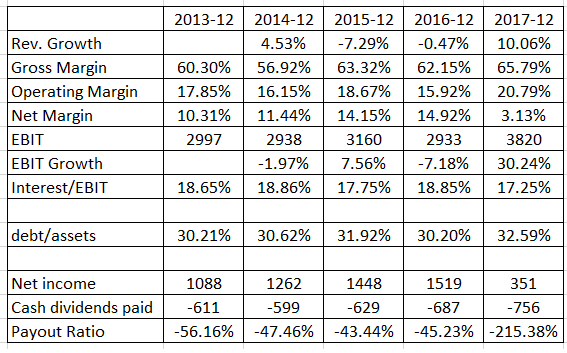
The company had a solid increase in gross income last year. The net income took a hit due to the one-time write-down of the wildfire losses. However, other aspects of its financials are solid.
Take Sempra. Pacific Gas & Electric currently has no dividend. While Edison International has insurance, it also has wildfire exposure.
This post is not an offer to buy or sell this security. It is also not specific investment advice for a recommendation for any specific person. Please see our disclaimer for additional information.
Disclosure: I/we have no positions in any stocks mentioned, and no plans to initiate any positions within the next 72 hours.
I wrote this article myself, and it expresses my own opinions. I am not receiving compensation for it (other than from Seeking Alpha). I have no business relationship with any company whose stock is mentioned in this article.

No comments:
Post a Comment