
Several factors indicate that Microsoft (MSFT) is overpriced. First and foremost, these are the technical parameters of stock dynamics.
Starting from 2012, Microsoft’s stock price has been following its long-term exponential trend (that always looks like a straight line on the graphs with log y-axis):
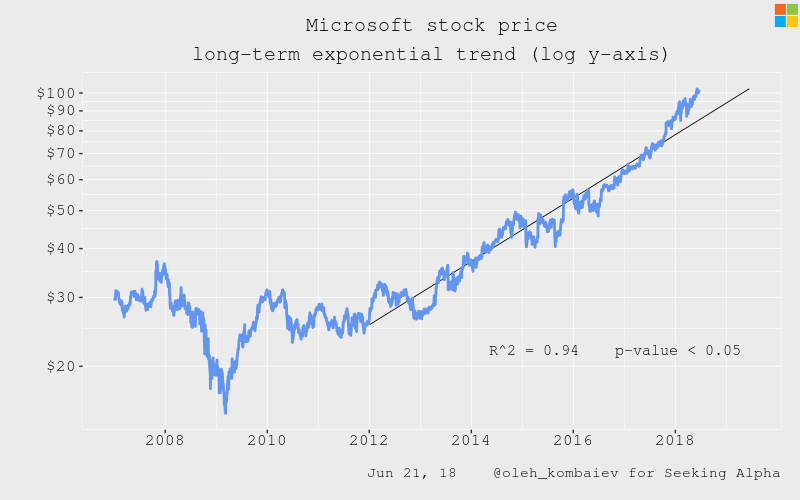
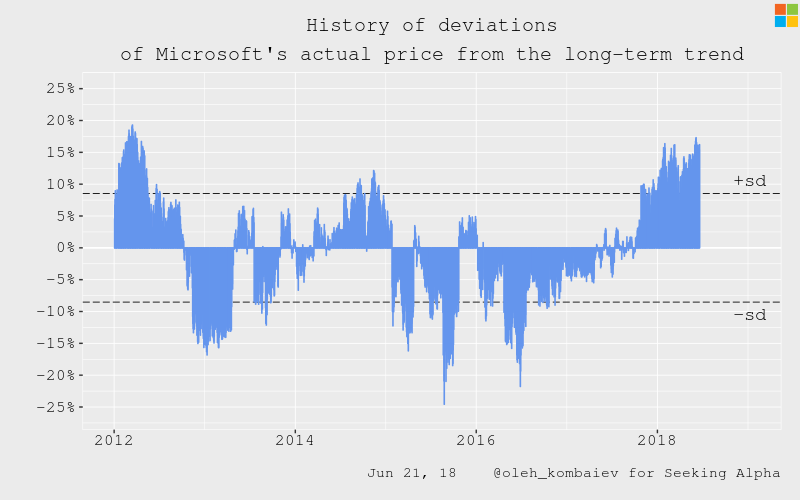
At that, the actual price of Microsoft’s stock is currently deviating from this trend by more than 15%. Note that the last time a similar deviation was fixed in 2014, followed by a correction in 2015:
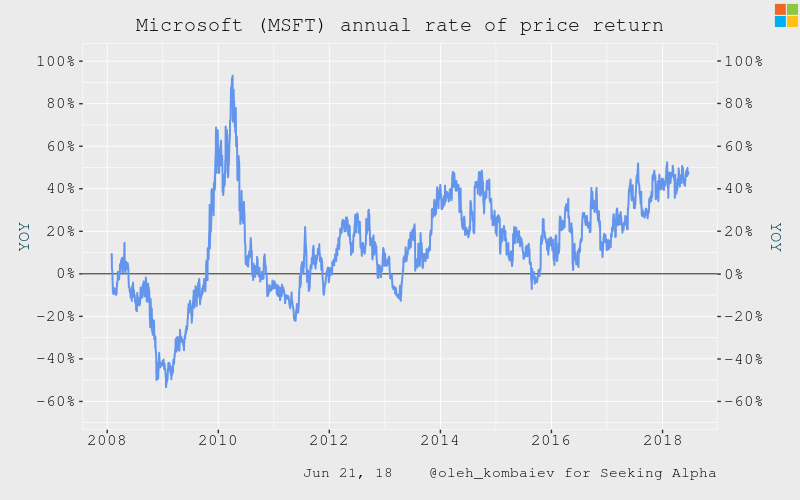
And that"s not it. Starting from 2018, the annual rate of price return of Microsoft’s stock has been fixed at the level of 50%. In my opinion, it’s not bad at all. However, a similar situation was observed in the already mentioned 2014, followed by a decline in return:
Now let’s take a closer look at the multiples.
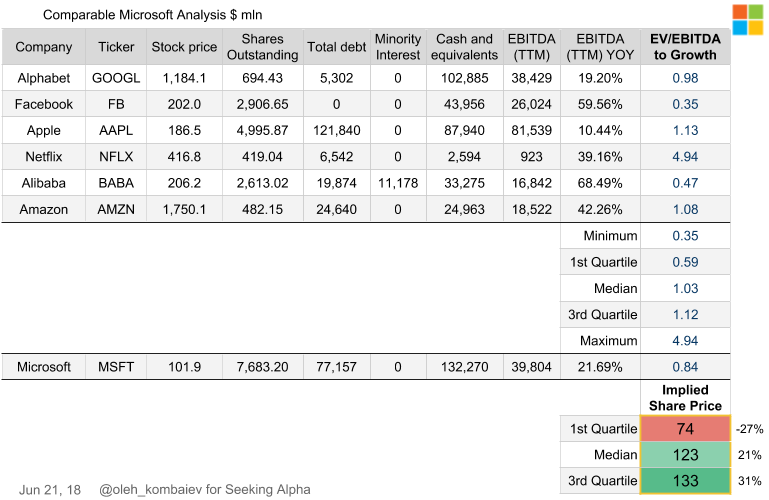
Comparing Microsoft with FAAANG companies through EV/EBITDA, we reveal growth potential of 40%, which is pretty good:
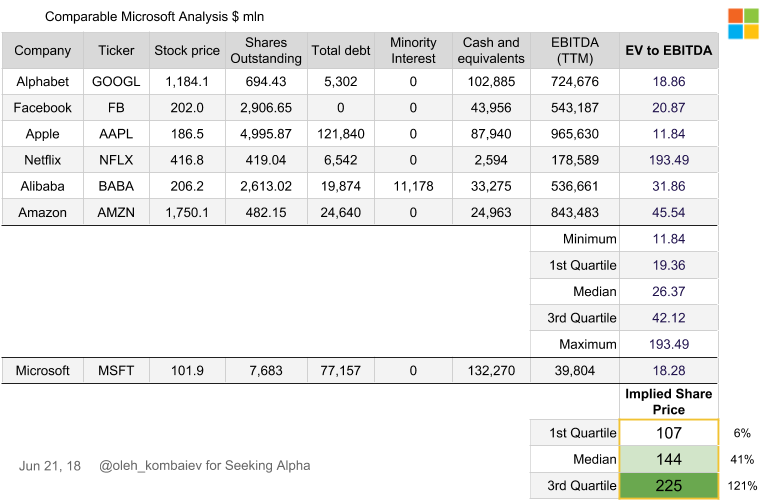
But growth potential will be reduced by half if we adjust this multiplier for annual growth rate of EBITDA:
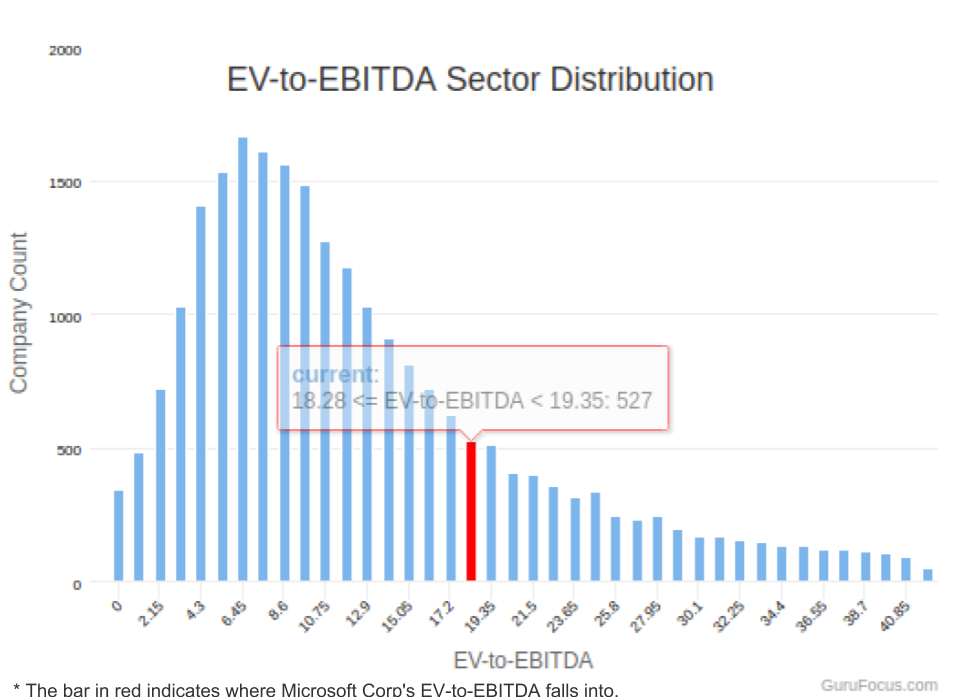
I would also like to note that looking at the industry as a whole and Microsoft in particular, its EV/EBITDA looks exaggerated:
Now let"s see how balanced current price of Microsoft is in the context of the expectations associated with this company.
Based on Yahoo! Finance data, I systematized the average analysts" expectations of earnings and revenues of the companies I closely monitor. Here"s what we have in terms of revenue:
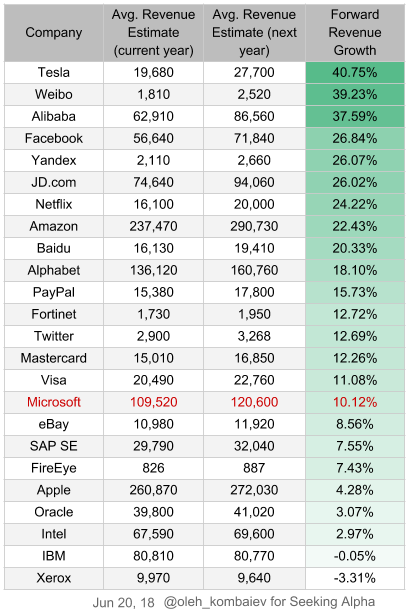
As you can see, the expected rates of Microsoft’s revenue growth are significantly below the median.
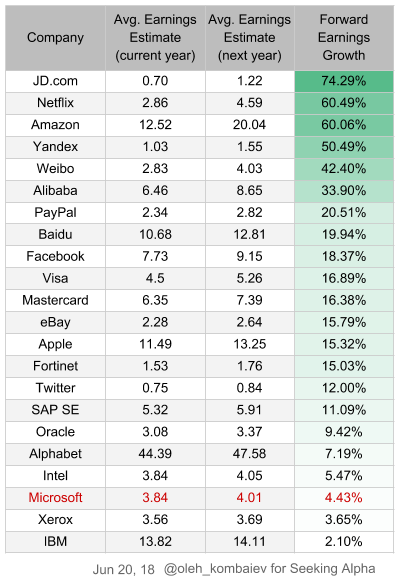
As for earnings growth expectations, Microsoft is even among the outsiders:
Now let’s do the following. Let’s calculate the P/S and P/E multiples based on the expected revenue and earnings in 2019 and adjust them for the expected growth of revenue and profit from 2018 to 2019. And let’s compare Microsoft with the FAAANG companies through the obtained multiples.

It becomes obvious that Microsoft is substantially overpriced on both multiples.
I took a step further and compared Microsoft in a similar way with all the companies on my list. The result has not changed much:
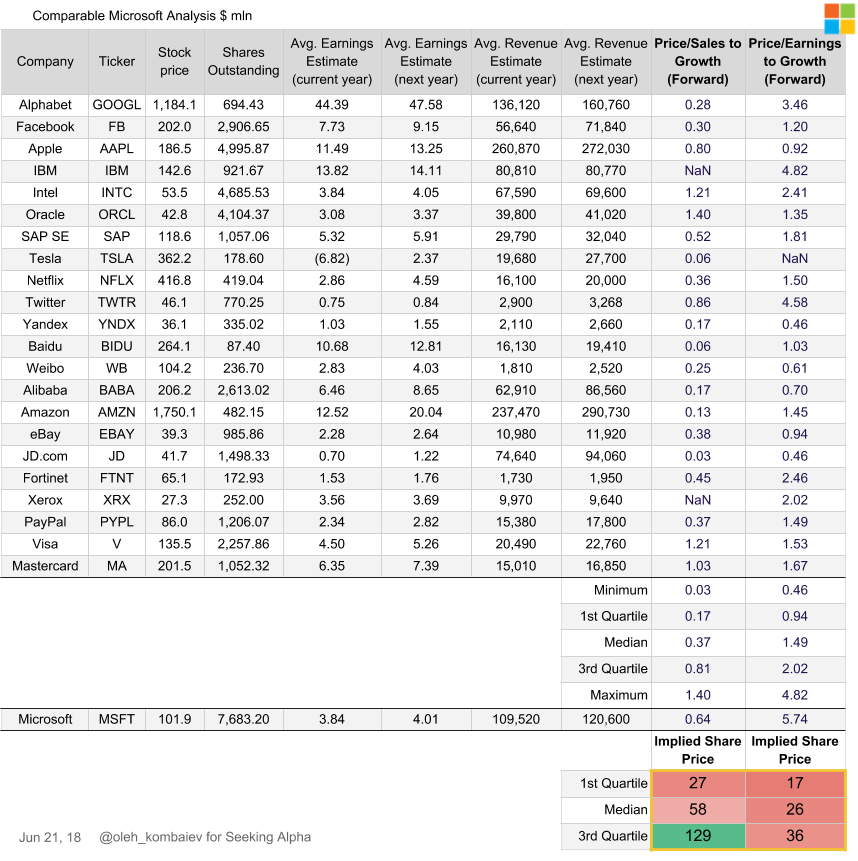
As you can see, if we look at Microsoft’s multiples through the prism of the anticipated growth rate, it is unreasonably expensive.
Now let"s analyze how Microsoft’s multiples correspond to the internal growth of the company.
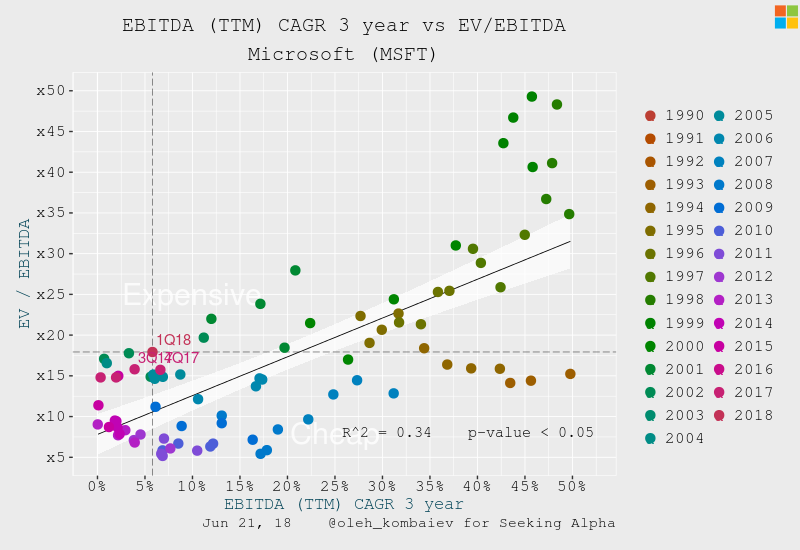
If you look at Microsoft over the past 28 years and analyze the interdependence between EV/EBITDA and 3-year CAGR of EBITDA, you’ll see that the current level of the multiple is substantially above the balanced state:
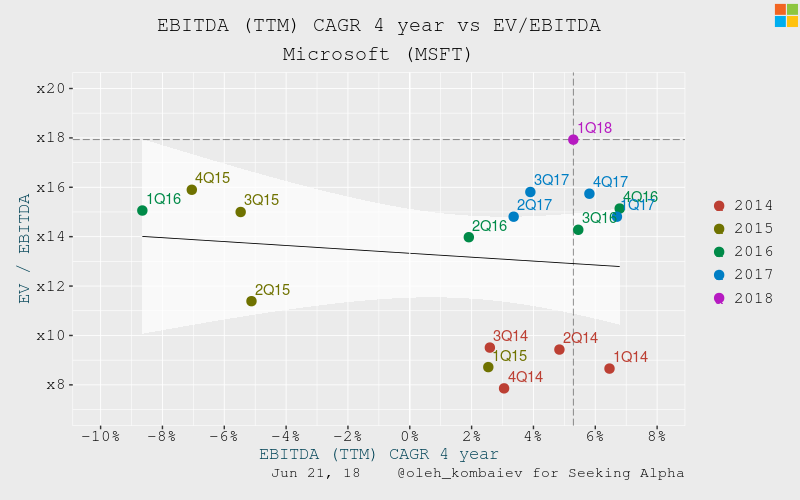
Looking at this interdependence only over the last 5 years, we come to the same conclusion:
Let’s look at the EV/Revenue since 2000 onwards in the same manner.

And we get the same result: the current rate of Microsoft’s revenue growth does not justify the current value of the company expressed by EV/Revenue.
Bottom line
Perhaps, a great future awaits Microsoft but now it is overheated and apparently in need of correction.
Disclosure: I/we have no positions in any stocks mentioned, and no plans to initiate any positions within the next 72 hours.
I wrote this article myself, and it expresses my own opinions. I am not receiving compensation for it (other than from Seeking Alpha). I have no business relationship with any company whose stock is mentioned in this article.

No comments:
Post a Comment