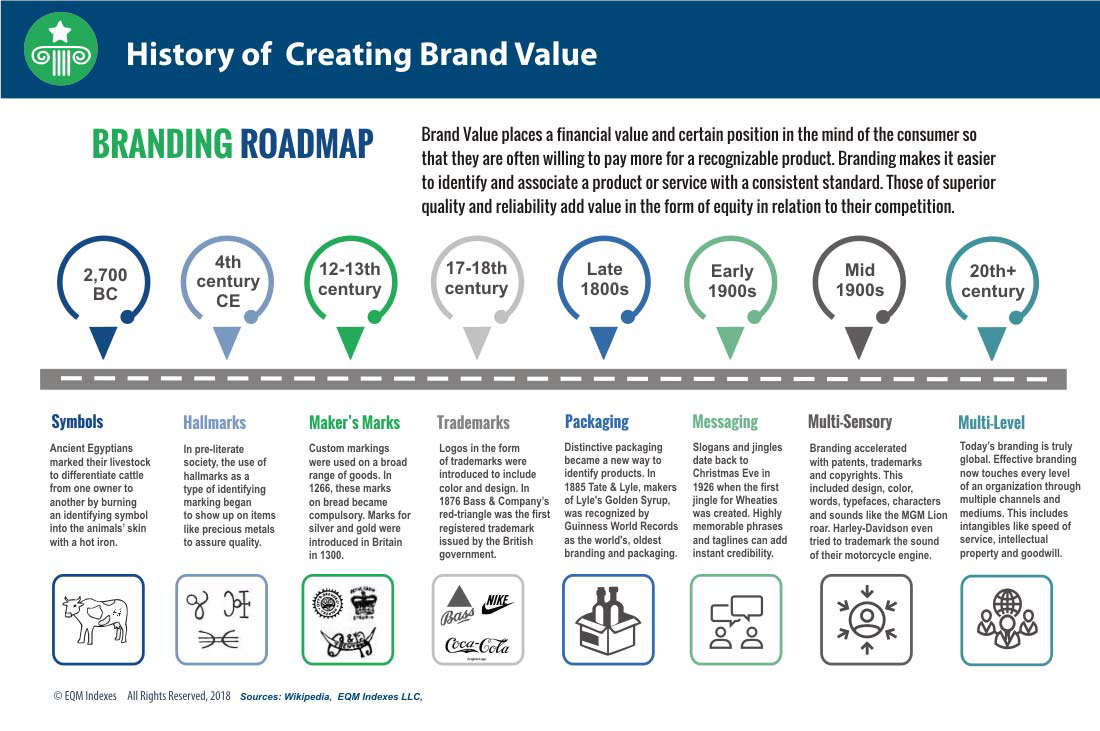
The concept of brand is nothing new. In fact, as demonstrated in the graphic below, brand has been around since ancient times. But the financial relevance of Brand in the digital age has grown, along with other intangible sources of value such as intellectual property, ideas, and data.
Source: EQM Indexes Ocean Tomo estimates that 88% of the value of the S&P 500 now resides in intangible assets—a huge jump from 1975 when it was only 17%. Tangible assets still register today, but the value scale has been inverted.
Brand is a collection of perceptions about a company, its assets, its people and its conduct. As described by Brandometry’s president Tony Wenzel, a strong brand can translate to a company’s bottom line by generating a “reputational ‘halo’ that confers a level of stakeholder loyalty.”
Brand consultancies have measuring brand for decades, however, it is only recently that non-financial data has been used to inform financial valuation and investment products. A year ago, Exponential ETFs launched the Brand Value ETF (NYSE:BVAL), the first of its kind investment product based on the survey data conducted by Tenet Partners on approximately 1,000 brands. Tenet’s survey data focuses on two key elements of brand: familiarity and favorability.
The new underlying index for the ETF includes the top firms with the largest spread between normalized brand strength score. The qualitative survey data is qualified by requiring a positive return on invested capital (ROIC). The portfolio of a maximum of 50 names is then equal weighted.
Year-to-date through 5/31/18, the Brand Value ETF has declined 3.8% versus a gain of 2.0% for the S&P 500 Total Return Index. But the backtested results of the EQM Brand Value Index, which launched on 6/1/18, has consistently bested the broad-market indices over the long-term.
Some of the top-performing brands in the Index this year are names such as Netflix (NASDAQ:NFLX), Amazon (NASDAQ:AMZN) and Mastercard (NYSE:MA).
Let’s look at these companies in the context of their brand value.
Netflix
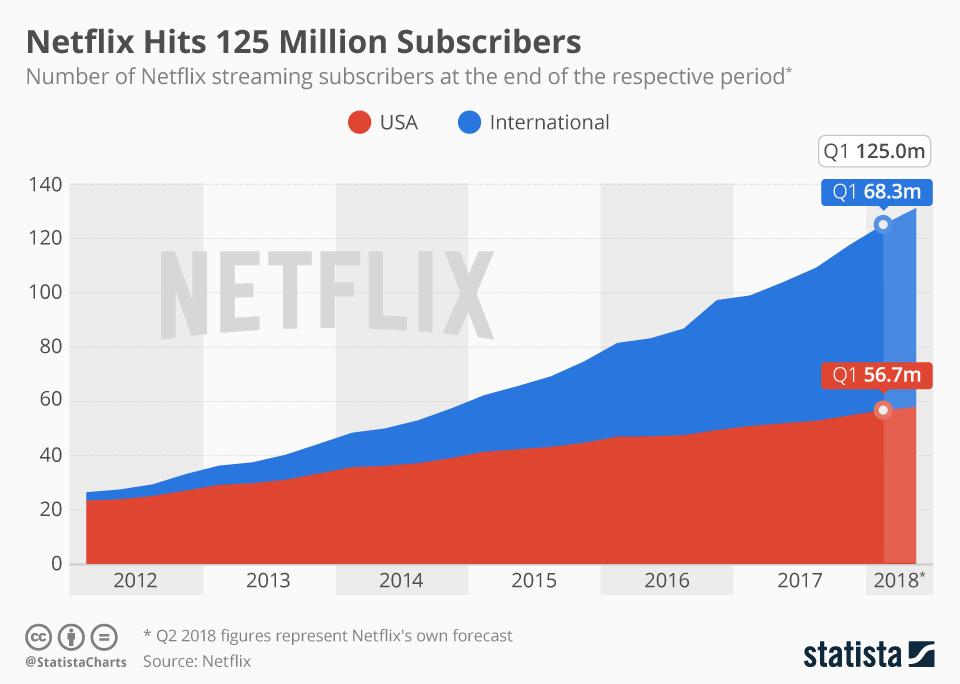
One of the truest signs of a successful brand is when it transcends being just a brand name and becomes a part of the English vernacular. Netflix is the perfect example of that and the term “Netflix and Chill” has become part of the national vocabulary. Netflix had nearly 125 million streaming subscribers globally, adding an additional 7.4 million in Q1 2018.
Source: Netflix, Statista
You would think based on its revolutionary success, that the market would have fully priced in the value of the Netflix brand. And yet, investor skepticism prevails and the market has consistently underestimated Netflix’s earning prospects, delivering an upside earnings surprise last quarter of 5.8% according to Bloomberg estimates.
Amazon
Amazon has been viewed by some as a victim of its own brand success. The stock has risen from $300 per share in 2015 to $1650 per share today, a gain of 450%. Looking at the company utilizing traditional valuation measures, Amazon looks expensive. But that does not take into account the intangible aspect of brand value.
Valuation Metric | Level as of 6/4/18 |
P/E | 260.31 |
P/Book | 25.42 |
P/Sales | 4.12 |
P/Cash Flow | 43.66 |
EV/EBITDA | 46.30 |
Source: Bloomberg
Brand Finance calculates that Amazon’s brand value is $150.8 billion, up 42% since 2017, and placing it as the most valuable global brand. It uses the royalty relief method to calculate brand which takes into account the value a company would be willing to pay to license a brand if it did not own it. The approach involves estimate the future revenue attributable to a brand and calculating a royalty rate.
Interestingly, using the royalty relief method, Netflix does not make the list of the top 10 global brands. This amplifies the need for the qualitative survey data Tenet Partners gathers on a quarterly basis. Brand is a visceral, qualitative measure, often not captured by financial metrics alone.
Mastercard
Mastercard is an interesting company because it does not issue credit cards, it operates a network that connects consumers to merchant bands. But at its very core, Mastercard is a Brand. Recently Mastercard revamped its brand identity, stemming from the desire to modernize the brand and optimize it for the web. But it was keenly aware that given the equity of the brand, the updates needed to be subtle.

Mastercard is another stock that has garnered criticism for its premium valuation based on traditional valuation metrics. And yet the company just reported record revenues and earnings last quarter. Although there is not a direct association between the company’s rebranding efforts and its recent financial performance, but they do appear to be gaining favor relative to Visa (NYSE:V) among investors since its rebrand in mid-July of 2016.
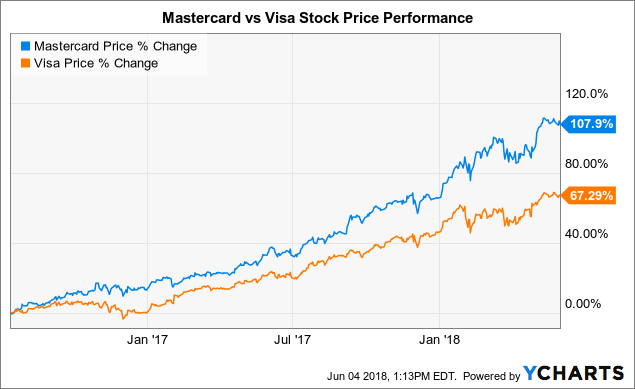
It should be noted that both Mastercard and Visa are both in the Brand Value Index.
What’s the Value of a Brand?
"If this business were split up, I would give you the land and bricks and mortar, and I would take the brands and trade marks, and I would fare better than you."
- John Stuart, Chairman of Quaker (ca. 1900)
Companies with strong brands offer the potential for growth due to a number of factors:
- Brand Is a Driver of Business Growth: Knowing that brand strength is key to growth, companies make substantial investments in brand-building activities guided by research. As brands live in people’s minds, they can inspire and build loyalty, potentially creating more business and significantly contributing to success.
- Adaptability and Relevance: Well-known companies thoughtfully fine-tune their brands to stay relevant and thrive amid changing business conditions and generational shifts, such as the rise of Millennials and their unique brand preferences. Consider the rapid growth of marketing technology (MarTech) software and demand-generation literature designed to provide dynamic relevance to prospects and customers.
- Shaping Customer Perception: To influence how customers perceive their companies’ brands, marketing teams use research-driven techniques to guide advertising campaigns and customer experience, as implemented on social media, packaging, signage, corporate identity and public relations. Consider the plethora of customer experience survey companies, such as Medallia, that have exploded since 2012.
Some Notable Brand Disasters
Of course, brand stories are not always happy ones. Brand risk is real. Over the years there have been many “brand disasters” that have not only hit the company bottom line but posed a major threat to their businesses.
Historical brand debacles include:
BP – (NYSE:BP) After oil giant BP’s Deepwater Horizon disaster in 2010, the company reported a loss of $5 billion the following year due to the negative backlash.
Volkswagen (OTCPK:VLKAY) – After it was revealed the company had been cheating on emission tests, public perception of the brand took a nosedive. A survey by Autolist the next year found that public willingness to buy a Volkswagen had fallen by 28%, while perception of the brand’s environmental consciousness had dropped almost 50%.
SeaWorld (NYSE:SEAS) - In 2013, the documentary Blackfish sparked global backlash against SeaWorld. The company is only now starting to recover after making major changes at its parks emphasizing ride attractions instead of animal acts.
These examples the extent to which brand value is an important component of financial performance.
How to Invest
In order to gain exposure to brand companies, investors can invest in individual brands or in a diversified fund such as the Brand Value ETF. The security is the first of its kind to use qualitative and quantitative brand signals to identify undervalued U.S. equities. Launched in June 2017 by Exponential ETFs and Brandometry, the fund offers investors access to large-cap companies whose share prices have not reflected the true worth of their brands.
“We believe intangible assets represent the next
frontier in stock valuation.”
~ Phil Bak, Chief Executive Officer, Exponential ETFs
From an investment standpoint, a collection of strong brands, such as those offered within the Brand Value ETF, may offer an appealing opportunity to pursue alpha. The fund takes advantage of mispricing opportunities as a brand’s estimated true worth disconnects from its market price, creating undervaluation and the potential for price appreciation.
Disclosure
EQM Indexes is the creator of the EQM Brand Value Index which has been licensed to Brandometry for the Exponential Brand Value ETF. It is not possible to invest directly in an index. Exposure to an asset class represented by an index is available through investable instruments based on that index. EQM Indexes does not sponsor, endorse, sell, promote or manage any investment fund or other investment vehicle that is offered by third parties and that seeks to provide an investment return based on the performance of any index. EQM Indexes makes no assurance that investment products based on the Index will accurately track index performance or provide positive investment returns. EQM Indexes is not an investment advisor, and makes no representation regarding the advisability of investing in any such investment fund or other investment vehicle. A decision to invest in any such investment fund or other investment vehicle should not be made in reliance on any of the statements set forth on this website. Prospective investors are advised to make an investment in any such fund or other vehicle only after carefully considering the risks associated with investing in such funds, as detailed in an offering memorandum or similar document that is prepared by or on behalf of the issuer of the investment fund or other vehicle. Inclusion of a security within an index is not a recommendation by EQM Indexes to buy, sell, or hold such security, nor is it considered to be investment advice.
Disclosure: I/we have no positions in any stocks mentioned, and no plans to initiate any positions within the next 72 hours.
Business relationship disclosure: EQM Indexes is the developer of the Brand Value Index

No comments:
Post a Comment