

This Thursday, May 24, 2018 file photo shows customers sitting around on cell phones and computers as well as sleeping at a local Starbucks coffee shop in Burbank, Calif. (AP Photo/Richard Vogel)
What can we learn from Starbucks" crisis in Philadelphia? Now the company must live the narrative it is creating.
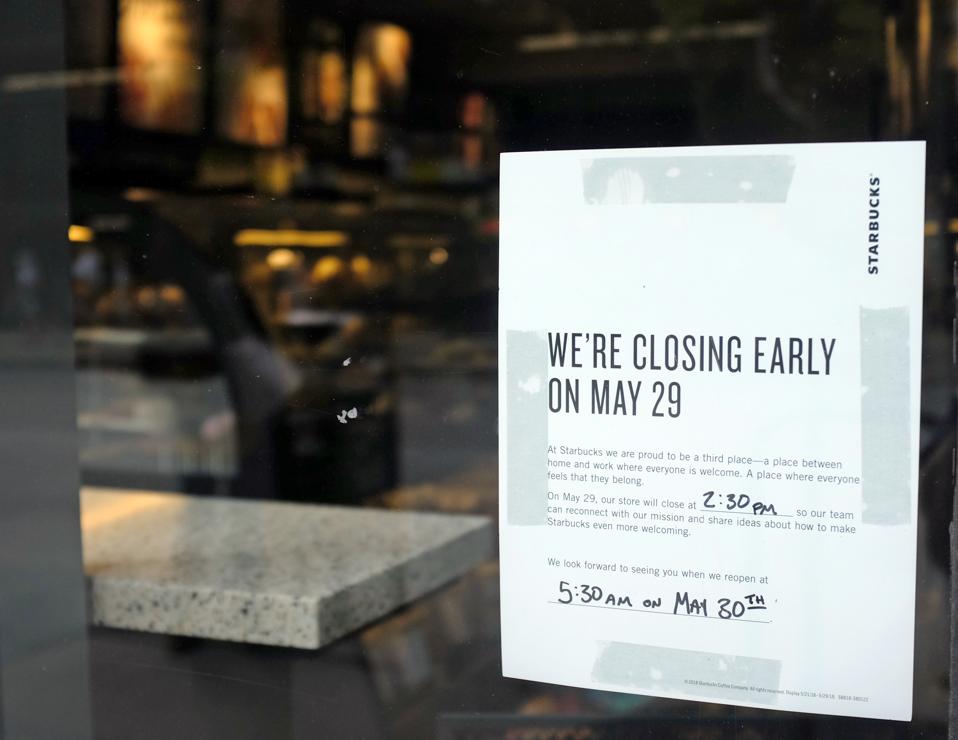
A store closing sign for May 25 is posted outside of a Starbucks store, Friday, May 25, 2018, in Chicago. Starbucks will close more than 8,000 stores nationwide on Tuesday to conduct anti-bias training, the next of many steps the company is taking to try to restore its tarnished diversity-friendly image. (AP Photo/Kiichiro Sato)
Tomorrow, millions of coffee drinkers won’t be able to get their daily java at Starbucks. Eight thousand stores are closed today for training, the company’s response to the arrest of two black men who peacefully came to a Philadelphia Starbucks for a business meeting.
This is one of several important actions Starbucks CEO Kevin Johnson took in the wake of the arrests, protests and media coverage in order to convince customers that what unfolded on 18th and Spruce was “not representative of our Starbucks Mission and Values.”
Telling good stories has become a staple in corporate marketing these days. Closing 8,000 stores enacts Starbucks’ story in a very public way. But how do we, the consumers, know it’s not just a Band-Aid? How can we tell if this public story really expresses the leaders’ true motives and beliefs when it comes to diversity?
The fact is, no amount of good storytelling will sustain an organization if their words, actions and hearts are misaligned.
Stories are not made of powerful words or fancy visuals alone. The real stories lie in what we say, what we do, and what is truly in our hearts. Individuals and organizations would do themselves and their constituents a big service by synchronizing these three key elements--internally and externally.

No comments:
Post a Comment