Qantas (OTCPK:QUBSF) is one of the airlines that has been operating the Boeing (BA) 747 alongside the Airbus (OTCPK:EADSF) A380. In May, Qantas confirmed that it would be phasing out its Boeing 747 fleet by 2020. In this report, we have a look at why Qantas is opting for an accelerated phase out of the Boeing 747, what is replacing it with and why no other aircraft of similar size or capacity is replacing the jumbo jet.
Boeing 747 replacement
Source: Australian Aviation Magazine
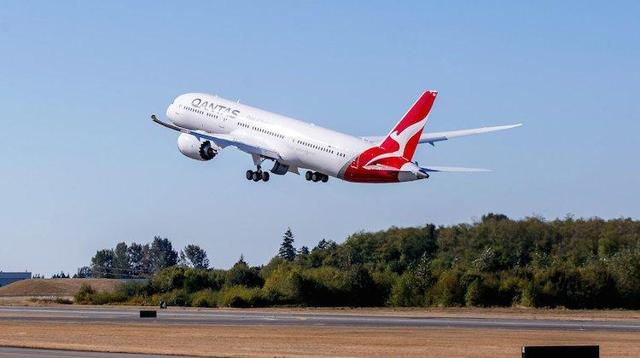
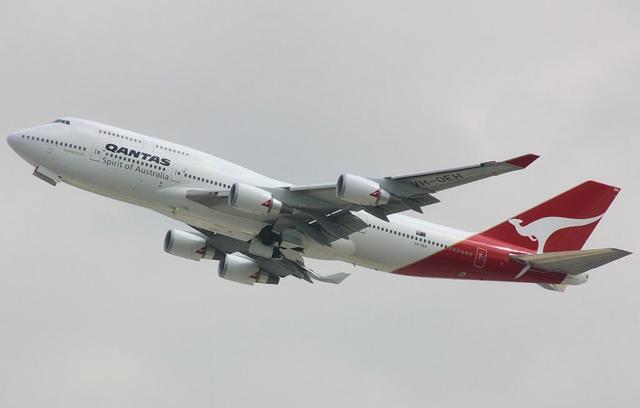
Qantas currently operates a fleet of 10 Boeing 747-400s, split between 6 extended range variants and 4 standard range variants. The oldest aircraft are nearing the 20-year mark, after which they could potentially be sold to other operators, converted to freighters or be stored. Qantas previously ordered 19 Dreamliners. 11 orders are for the Boeing 787-8 destined for Jetstar Airways with the remaining 8 being orders for the Boeing 787-9 for Qantas. The carrier has already taken delivery of the first 4 aircraft leaving 4 left on order and has now added another 6 units to the order book, which is enough to replace the Boeing 747 fleet.
Accelerated phase out
Initially Qantas planned to phase out the remaining Boeing 747-400 and Boeing 747-400ERs by 2022 or 2023 at latest. There are 2 main reasons to go for an earlier phase out. The first reason being the higher maintenance costs. The difference in maintenance costs between a 20 year old airframe and a 22-year old airframe already is 7%. That is quite significant and does not include additional down-time for the aircraft as its ages. The other reason and possibly the main driver to replace the Boeing 747 fleet are the oil prices and more specifically expectations of higher oil prices. By 2023, it is expected that oil prices have risen between 5% and 25% from current levels and that is reason enough to consider fuel efficient aircraft over aircraft with lower capital costs but higher operating costs such as the Boeing 747-400.
Big aircraft, small replacement
What might be somewhat surprising is that the big Boeing 747-400 is being replaced by the Boeing 787. There is quite big difference in capacity between the two; the Dreamliner carries 236 passengers in the configuration used by Qantas while the Boeing 747-400 carries up to 364 passengers. So in terms of capacity it certainly is not a fitting replacement. Just going by seat count and not taking into account utilization, Qantas would need at least 5 Dreamliners more to maintain the same seat count. Replacing bigger aircraft with smaller ones, however, is not something new. We saw Delta Air Lines (NYSE:DAL) doing it in the past when it replaced its 376-seat Boeing 747-400 with the 306-seat Airbus A350-900.
The replacement of bigger aircraft with smaller aircraft likely has to do with networks being increasingly more frequency oriented next to the broader trend of serving point-to-point.
Source: Wikimedia
One thing that is often brought up is the fact that Qantas did not opt for the Boeing 777 and also this time it has not opted to replace the Boeing 747-400 with the Boeing 777. We think that Qantas not opting for the extended range variants of the Boeing 777 has more than one reason.
The first one being that Qantas had already committed to purchasing the Airbus A380 and as the A380 was coping with delays, the airline acquired some Airbus A330 aircraft at higher discounts. In hindsight, it is easy to say that Qantas should have dropped the order for the Airbus A380 but the fuel price environment at that time made the Airbus A380 attractive and the Boeing 777 was being constrained by ETOPS (Extended-range Twin-engine Operational Performance Standards) forcing reroutes. So at that time using quads for long haul operations was basically the only way to go for Qantas and on the domestic routes the Airbus A330 would be the better choice. Looking back it is evident that Qantas should have ordered the Boeing 777-300ER or the Boeing 777-200LR instead of the Airbus A380 and Boeing 747-400ER.
At this point, also ordering additional Airbus A380s is not appealing since it is a plane that is hard to fill and burns significantly more than smaller alternatives.
At this moment the Boeing 787 is the better fit to keep the number of types in the wide body fleet low to keep support costs low. Additionally, Qantas is looking at adding bigger aircraft to its fleet that will likely be more tied to the future of the Airbus A380.
Conclusion
The choice for the Boeing 787 does make sense since smaller jets currently seem to be favored over bigger aircraft and Qantas is already familiar with the capabilities of the Boeing 787. We think there is the possibility that Qantas will add additional Dreamliners in the future, but currently is taking a conservative approach in the process of committing to expensive aircraft.
The Australian airline is looking to further enhance its wide body fleet, but that is something that is more tied to the future of the Airbus A380. You could say that Qantas currently is in the process of fixing the mistakes it made years ago when it remained committed to the operations of quad-engine aircraft.
If you enjoyed reading this article, don’t forget to hit the Follow text at the top of this page (below the article title) to receive updates for my upcoming articles.
Disclosure: I am/we are long BA, EADSF.
I wrote this article myself, and it expresses my own opinions. I am not receiving compensation for it (other than from Seeking Alpha). I have no business relationship with any company whose stock is mentioned in this article.
Editor"s Note: This article discusses one or more securities that do not trade on a major U.S. exchange. Please be aware of the risks associated with these stocks.

No comments:
Post a Comment